franka-arm-vla
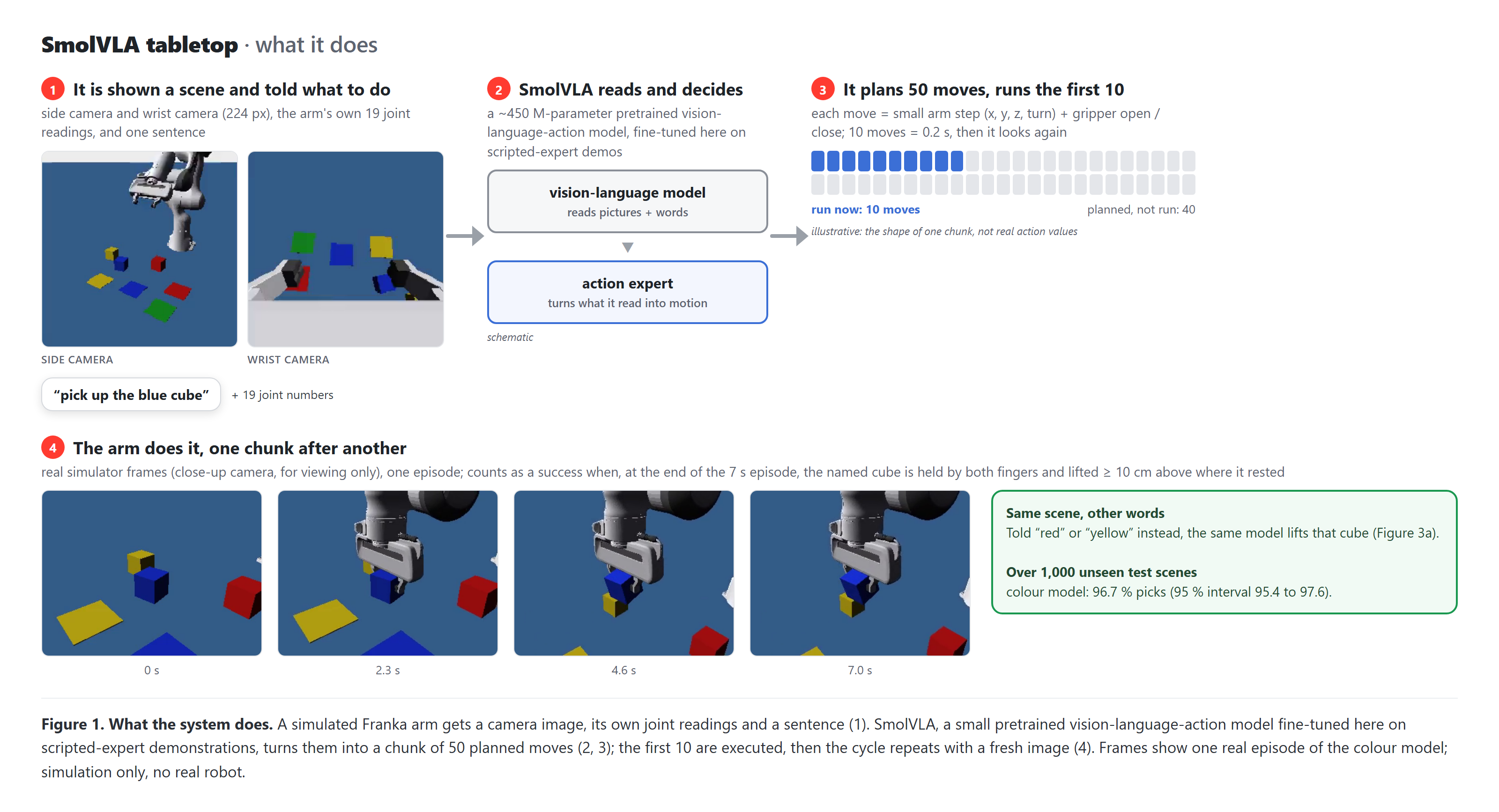
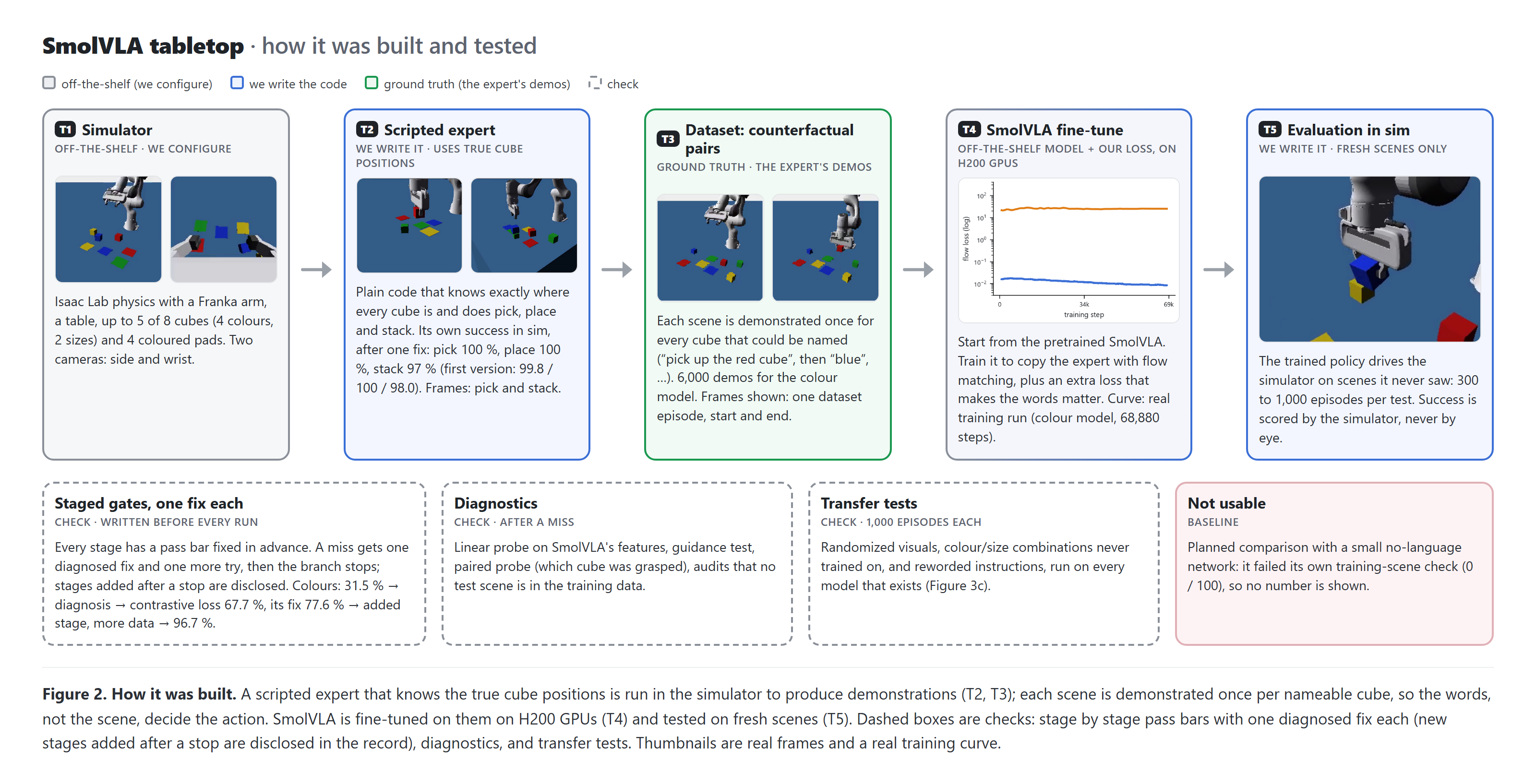
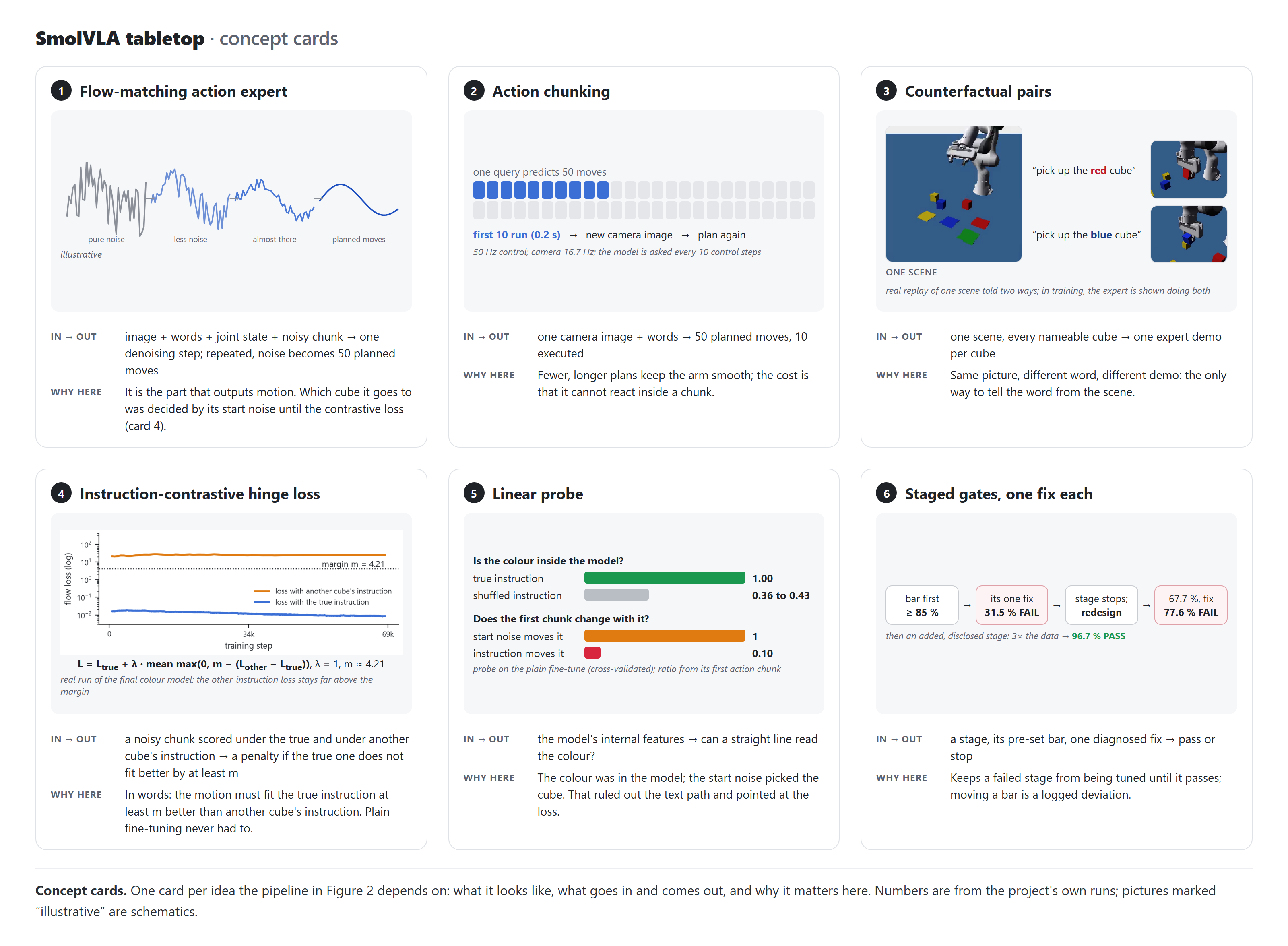
A small pretrained vision-language-action model (SmolVLA, ~450 M parameters), fine-tuned to make a simulated Franka robot arm pick up the cube you name in a typed sentence. Simulation only; no real robot.
The demo in 1 min 38 s (no sound): the same scene with three sentences, before and after the fix; then four episodes each of placing and stacking with the simulator's verdict, passes and failures shown in full. Download the mp4.
Story cut (1 min 44 s)
One cube (96.8 % of unseen scenes); several cubes, where plain fine-tuning ignored the colour word (31.5 %; a title card calls it the "first try", but it was the second colour attempt, after 36.8 %); the fix (96.7 %); then sizes, place and stack, which did not reach their targets. For each skill it shows one successful episode; the true mix of passes and failures is in the video above and in the per-skill demo below. Download the mp4.
Per-skill demo (4 min 52 s)
For each skill: what the robot was told, the success rule quoted from the evaluator's code, the headline rate, the first 16 episodes from unseen demo scenes (not selected, real time, the simulator's verdict on each), and one episode full size with what the policy itself sees. Download the mp4.
Results
| skill (one model each) | success on unseen scenes [95 % CI] | target | result |
|---|---|---|---|
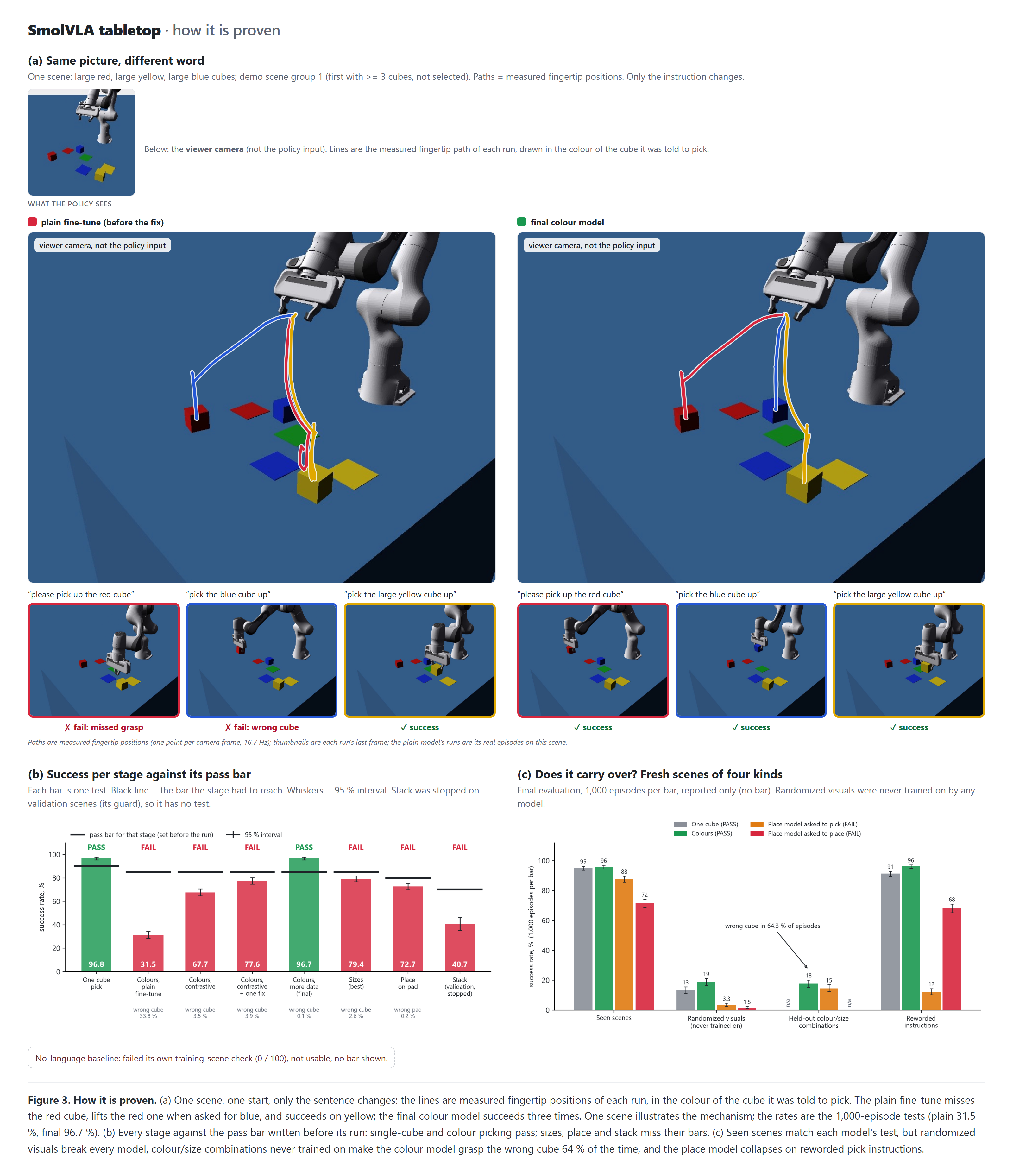
| One cube: pick it up (cube rotated ≤ ±15°) | 96.8 % [95.5, 97.7] | ≥ 90 % | PASS |
| Colours: pick the cube named by its colour | 96.7 % [95.4, 97.6] | ≥ 85 % | PASS |
| Colours and sizes | 79.4 % [76.8, 81.8] | ≥ 85 % | FAIL |
| Place the named cube on the named pad | 72.7 % [69.9, 75.4] | ≥ 80 % | FAIL |
| Stack the named cube on another cube | 40.7 % [35.3, 46.3] (300 validation scenes; training stopped early) | ≥ 70 % | FAIL |
| By colour, before the fix (plain fine-tuning) | 31.5 % [28.7, 34.4] | ≥ 85 % | FAIL |
1,000 unseen test scenes per row unless noted. Each test was run once; pass marks were written before the runs. Every attempt and redesign is in the full record.
Figures